Emily Dickinson is one of American's most popular poets. Her style of poetry continues to inspire writers and poets today.
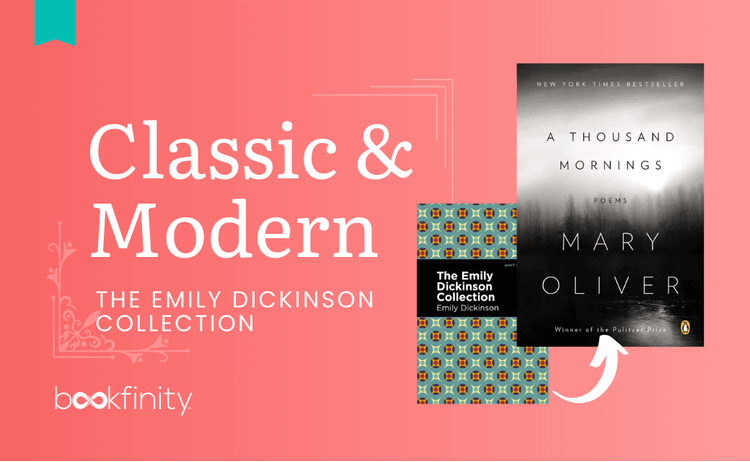
The Classic - The Emily Dickinson Collection
Emily Dickinson is one of America's best-known poets. Her short but powerful poetry has inspired writers and readers for ages. While she was considered a recluse during her life, she was always a keen observer. Dickinson wrote on love, life, death, self-identity, and nature. She wrote what she knew and showed her readers how beautiful even the small things could be.
Outside her signature style of short, untitled poems, Dickinson was known for subverting expectations. What she writes on the page is more than it seems. She plays with perception and encourages readers to re-visit her work to find its mysteries.
“Tell the truth, but tell it slant” — Dickinson
The Emily Dickinson Collection
by Dickinson, Emily
The Emily Dickinson Collection (2021) compiles some of the best-known works of an icon of American poetry. Out of nearly two-thousand poems discovered after her death, less than a dozen appeared in print during Dickinson's lifetime. Drawn from such influential posthumous volumes as Poems (1902) and The Single Hound (1914), The Emily Dickinson Collection captures the spiritual depths, celebratory heights, and impenetrable mystery of Dickinson's poetic gift. "Fame is a fickle food / Upon a shifting plate, / Whose table once a Guest, but not / The second time, is set." Deeply aware of the fleeting nature of fame, Dickinson--whose reputation in life was as a lonely eccentric who rarely, if ever, left home--seems to provide some clarity as to why publication so often eluded her. Having published just ten poems in her lifetime, Dickinson continued to write in solitude until her final years. Her final word on fame is a warning, perhaps, for poets whose fate would differ from her own: "Men eat of it and die." Despite her admonishing tone, she found space elsewhere to muse on the nature of literary achievement, recognizing that obscurity could incidentally produce the conditions for a poet to produce their most vital work: "Success is counted sweetest / By those who ne'er succeed. / To comprehend a nectar / Requires sorest need." Throughout her life, Emily Dickinson showed a profound respect for the mysteries of worldly existence. In her poems, this creates an atmosphere of prayer and contemplation, a search for something beyond the simple answers: "Some things that fly there be, -- / Birds, hours, the bumble-bee: / Of these no elegy." Amid such fleeting things, she catches a glimpse of eternity. With a beautifully designed cover and professionally typeset manuscript, this edition of The Emily Dickinson Collection is a classic of American poetry reimagined for modern readers.
Our Modern Companion - A Thousand Mornings: Poems by Mary Oliver
Similar to Dickinson, Mary Oliver was a keen observer of her surroundings. She also spent time in solitude, but Oliver found her sanctuary in nature. There she found her inspiration and soon became known as a guide to nature’s lesser-known parts.
Full of blank verse and accessible language, Oliver’s poems look nothing like the work of Dickinson. However, both poets are masters at luring in readers with incredible imagery, then offering an emotional release they didn’t know they needed. Both take readers on a journey of introspection through the observation of the outside world.
Oliver has been compared to Dickinson many times. Not only because they write so well on similar themes - they even share poems about hummingbirds - but because they both write about the truth. They just tell it slant.
A Thousand Mornings: Poems
by Oliver, Mary
The New York Times-bestselling collection of poems from celebrated poet Mary Oliver
In A Thousand Mornings, Mary Oliver returns to the imagery that has come to define her life's work, transporting us to the marshland and coastline of her beloved home, Provincetown, Massachusetts. Whether studying the leaves of a tree or mourning her treasured dog Percy, Oliver is open to the teachings contained in the smallest of moments and explores with startling clarity, humor, and kindness the mysteries of our daily experience.

Discover more classics and their modern companion each week.